
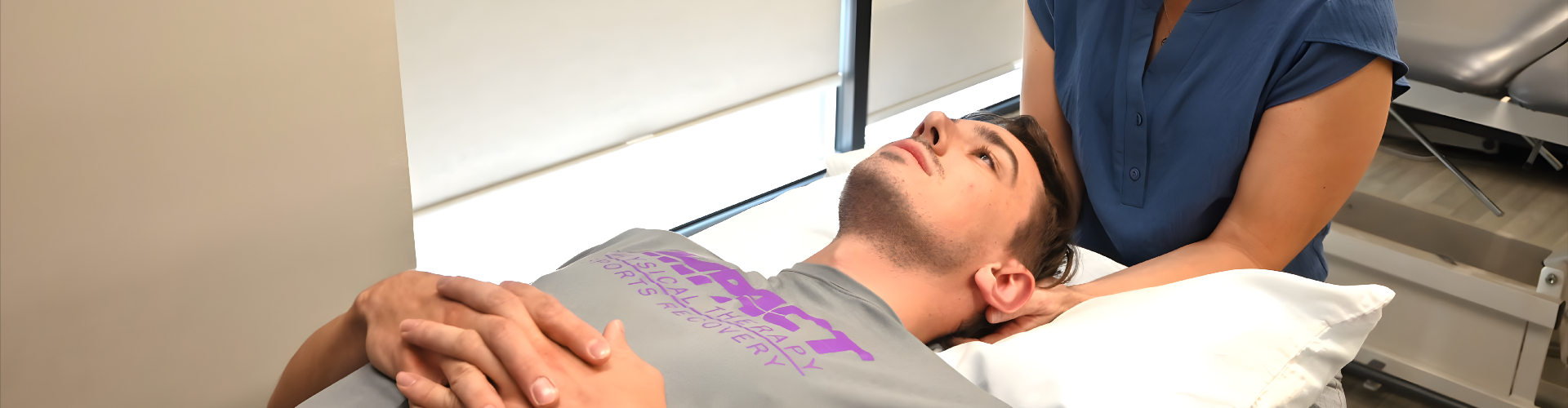
When Neck Pain and Headaches Affect Daily Comfort
Neck pain and headaches often occur together, especially when posture, muscle tension, or movement limitations affect the upper spine. Turning the head, working at a desk, driving, sleeping, or staying active can become uncomfortable. For many people, headaches linked to neck pain add another layer of frustration, making it harder to focus or stay productive.
Neck pain is pain felt in the upper spine area just below the head. When neck movement becomes limited or muscles remain tense, discomfort may extend into the upper back, shoulders, or head. At IMPACT Physical Therapy & Sports Recovery, physical therapy helps people with neck pain and headache relief by improving movement, strength, and control. If you are ready to get started, request an appointment in Illinois and meet with one of our physical therapists.
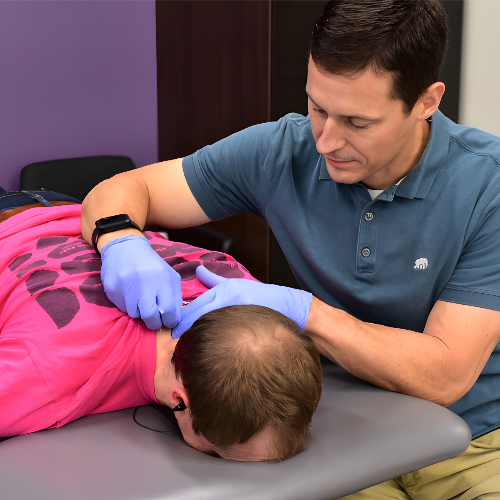
Common Neck Pain Conditions
TMD or TMJ
Temporomandibular Joint Dysfunction (TMD) describes the problems that may occur at the temporomandibular joint (TMJ). This joint is where your jaw bone attaches to the skull. It is a complex joint that has to slide forward and drop down in order for your jaw to open. It moves thousands of times a day with talking, eating and any time you move your jaw. The joint has a disc or fluid filled sac within it and has many ligaments and muscles that coordinate movements.
The TMJ relies heavily on proper posture and alignment to function well. The posture and positioning of the neck and head play a large role in the pulls of muscles on the TMJ. Abnormal muscle pulls can lead to altered movement of the TMJ and thus pain.
Arthritis and Stenosis
When the spurs protrude in the holes on the side of the neck where the nerves exit out (foramen), or the central spinal cord canal, this is called spinal stenosis. Spinal stenosis can be central stenosis or foramenal stenosis. It can cause a variety of symptoms, from chronic pain, to numbness and tingling into the arms. In severe cases of central canal stenosis, which affects the spinal cord, poor balance, pain in the legs and difficulty with walking can occur.
People with osteoarthritis in the neck can experience chronic pain, stiffness and limited range of motion with turning their head and looking up. Pain may be worse in the morning or after prolonged sitting.
Forward Head Syndrome
Forward head syndrome is extremely common in today’s society and describes a condition where, due to changes in posture, the head juts forward actually shortening the neck. This can be mild or severe and is affected by different factors such as type of work, age, arthritis and genetic factors.
Due to prolonged sitting, poor posture with work, working at a computer, sitting at home in poor posture watching TV and a host of other common poor postures, changes in your spine can occur over time. Think about how much time you spend looking into a screen and hunched over a desk. The 10–12lbs of your head are pulling forward on your spine.
Over time, the normal curve in your neck reduces, the length of the spine decreases and muscles in the neck become weaker. This can lead to a variety of symptoms from neck pain, to headaches and even impinged nerves radiating pain into the upper extremities.
Whiplash
Whiplash can occur with many different accidents, but is often seen in motor vehicle accidents. The weight of the head and spine is whipped back and forth with the fast movement of an accident or fall. The muscles in the neck don’t have time to react and the harsh forces, strain, rip and tear muscles, ligaments and other tissues. In severe cases, fractures can occur in the bones of the neck (vertebrae).
Due to the shock and trauma initially from an accident, pain may or may not be present. Whiplash typically feels worse 1–2 days after the injury as inflammation sets in and tissues become swollen. This can lead to headaches, pain with movement and even numbness / tingling into the upper extremities.
Often, people can have long standing weakness of the neck muscles, leading to future problems, if their whiplash is not fully treated. Strengthening and postural exercises are very important to maintain stability in the neck after a whiplash injury.
Why Neck Pain Can Lead to Headaches
The neck plays a key role in supporting the head and guiding movement throughout the day. Poor posture, repetitive tasks, prolonged sitting, and physical strain can overload the muscles and joints of the cervical spine.
When certain nerves are affected, the pain can extend beyond the back of the neck to areas such as the upper back, shoulder, and arm. Muscle tension and joint stiffness in the neck can also contribute to headaches that feel tight, achy, or pressure-like, especially around the base of the skull or temples.
The majority of neck pain episodes do not require surgery and respond best to physical therapy. Addressing neck mobility, posture, and muscle support early helps reduce strain and supports better daily comfort.
Common Symptoms Linked to Neck Pain and Headaches
People with neck pain and neck-related headaches may experience:
- Stiffness or limited neck movement
- Pain in the neck or upper back
- Headaches that worsen with posture or movement
- Muscle tightness in the neck or shoulders
- Pain that spreads toward the shoulder or arm
- Tingling or numbness in the arm or hand
- Difficulty sleeping due to discomfort
- Increased pain with sitting, driving, or computer work
Neck pain caused by irritated nerves may extend into the upper back, shoulders, arms, or hands. Symptoms vary depending on which structures are affected.
How Care Is Approached
Physical therapy at IMPACT Physical Therapy & Sports Recovery begins with a thorough evaluation of neck movement, posture, muscle strength, and how symptoms appear during daily activities. Clinicians focus on identifying movement limitations and tension patterns that contribute to both neck pain and headaches.
Treatment methods commonly used include:
- Manual therapy, used to address joint stiffness and muscle tightness in the neck, helping reduce tension that contributes to headaches
- Specific neck and upper-back exercises, designed to improve strength and support the cervical spine
- Postural training, helping reduce strain from desk work, driving, and daily habits
- Neuromuscular reeducation, improving coordination and control of neck and shoulder movement
- Movement retraining, focused on restoring comfortable head and neck motion
- Athletic training principles, when appropriate, to support individuals returning to sport or physically demanding activity involving the upper body
Each approach is selected based on how symptoms affect daily life and functional goals.
Care That Reflects Skill and Personal Attention
At IMPACT Physical Therapy & Sports Recovery, we’re proud to offer personalized, one-on-one care in a warm and welcoming environment. As a physical therapist-owned practice, our team emphasizes hands-on treatment, clear communication, and thoughtful progression.
Our physical therapists design individualized treatment programs to help people with neck pain reduce or eliminate pain, regain normal movement, and get back to their regular activities. This philosophy guides care for neck pain and headache relief throughout Illinois.
Take the Next Step Toward Neck Pain and Headache Relief
If neck pain or headaches are interfering with your comfort, focus, or daily routine, contact IMPACT Physical Therapy & Sports Recovery to request an appointment and learn how personalized physical therapy and athletic training can help you move more comfortably and feel more in control of your symptoms.
Frequently Asked Questions About Neck Pain and Headaches
Can neck pain really cause headaches?
What is cervical radiculopathy?
Do headaches improve when neck movement improves?
We provide neck pain and headache relief in all of our clinics: Champaign, IL, Hinsdale, IL, Lakeview in Chicago, IL, Naperville, IL, Norridge in Chicago, IL, Oak Lawn, IL, Orland-Park, IL and South-Loop in Chicago, IL