

By: Bill Peterson PT, DPT, Astym Cert.
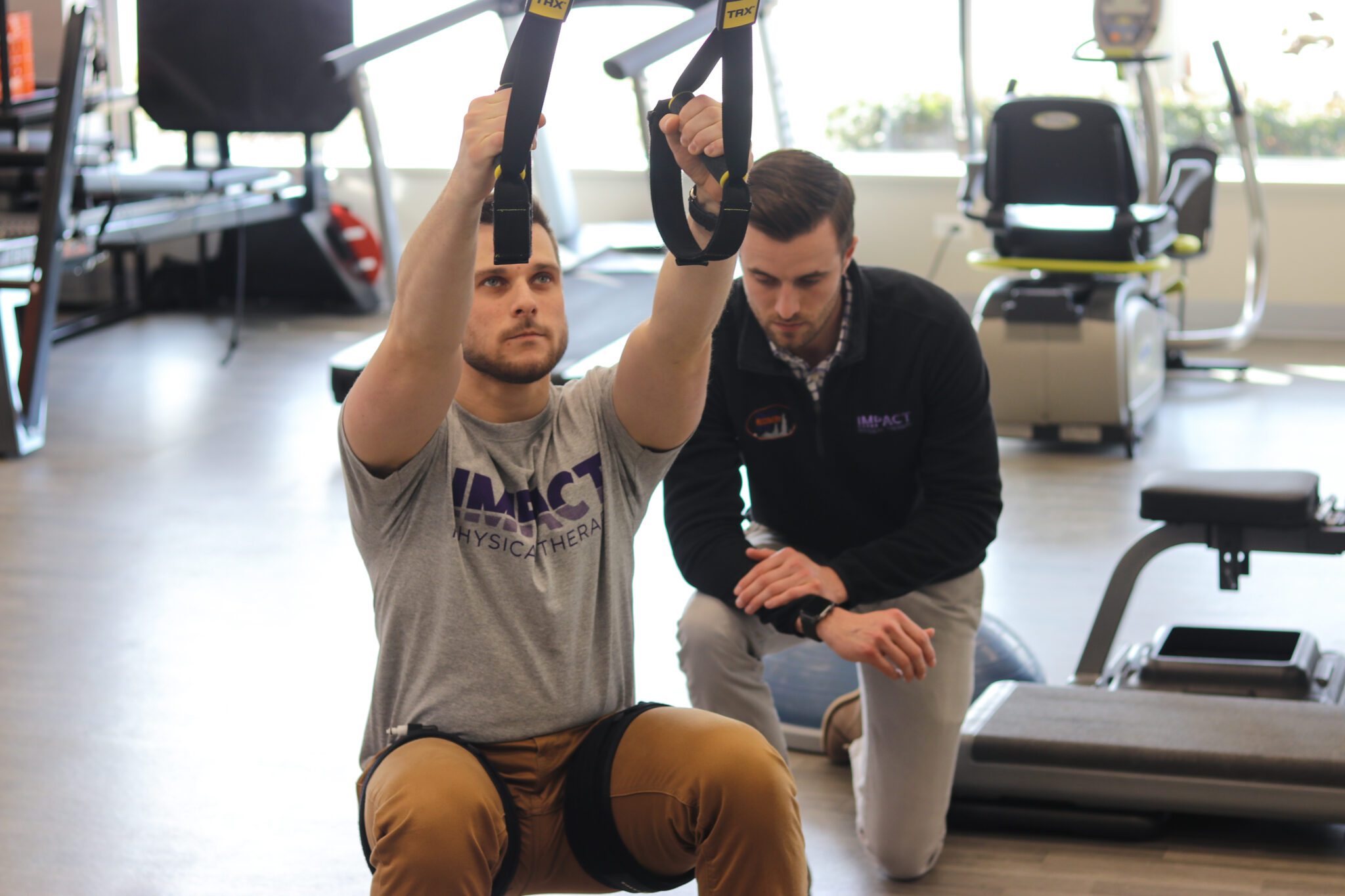
If you are someone that frequents the gym, follows professional athletes on Instagram, or subscribes to different fitness trainers on Youtube, you may have seen people exercising with what looks like a blood pressure cuff on their arms or legs. You may have also been wondering why they would be doing that other than to make their veins “pop.”
What they are doing, or attempting to do, is called blood flow restriction (BFR) training. Blood flow restriction training is a specialized technique for strength training that originated in Japan in the 1960’s. Over the past 10 years, it has gained popularity in the United States for fitness training, and most recently, in the world of physical therapy.
Blood flow restriction training can be defined as a brief and intermittent occlusion of arterial and venous blood flow using a specialized device while at rest or exercising. Using this technique, you can exercise using significantly less resistance and still achieve significant gains in muscle strength and muscle hypertrophy.
How is it performed?
A physical therapist, or trained healthcare professional, will start by placing the blood flow restriction cuff on your arm or leg at the appropriate anatomical location. The cuffs can be used on one or two of your extremities at a time. From there, they will use ultrasound to help occlude the appropriate percentage of arterial and venous blood flow. Once the appropriate occlusion percentage has been achieved, the patient or client will complete strengthening exercises with a goal of reaching muscular fatigue.
How does BFR work?
The air chambered cuff acts as a tourniquet cutting off a percentage of the blood supply to your muscles. This causes a reduction of arterial outflow and venous return. The lack of arterial outflow means that your muscles are receiving less oxygen than they are used to, creating a hypoxic environment. The lack of venous return leads to cellular swelling and a buildup of metabolites in the area. The combination of the two, causes your muscles to become fatigued at a faster rate due to a needed increase in the recruitment of type II muscle fibers, which are the muscle fibers that are primarily responsible for increasing strength and hypertrophy. Not only does BFR training cause increased type II muscle fiber recruitment, but it increases protein synthesis, growth hormone, and testosterone in the occluded limb. All of these factors contribute to strength and hypertrophy increases of the exercised muscle.
In short, a person is able to use BFR training to exercise for less time and with less resistance, while still being able to achieve muscular fatigue, leading to similar benefits of heavy-load resistance training.
This can be especially helpful in a physical therapy treatment plan. Oftentimes, injured patients are unable to lift heavier weights to improve their strength for a number of reasons. Sometimes, they just had surgery and it is a contraindication. Other times, it is too painful due to an arthritic joint, a joint sprain, a muscle strain, or tendonitis. BFR training allows us to navigate around those situations leading to superior results.
Hopefully after reading this, you have a better understanding of how BFR works and why it continues to gain popularity in the physical therapy world. We know that every injury or condition is different and every patient has different goals, but if you are seeking physical therapy and BFR training is something you may be interested in, you can schedule a consultation with one of our trained physical therapists.