Targeting Muscle Trigger Points When Tightness Keeps Coming Back
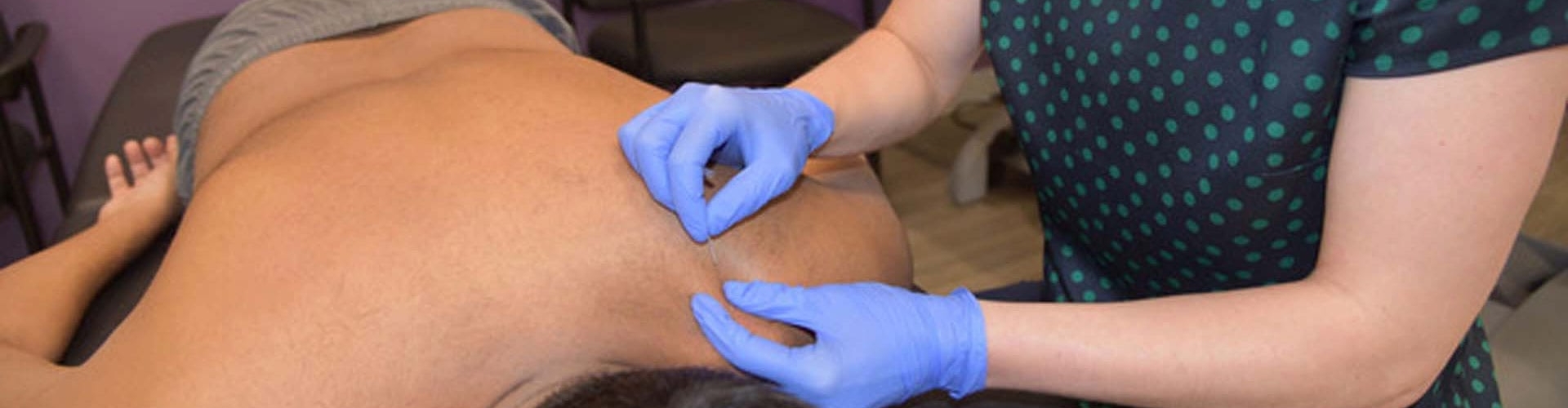
Trigger point dry needling is a technique physical therapists use to reduce muscle tension and improve movement when tight, sensitive muscle points keep flaring up. Many people ask about trigger point dry needling when a “knot” in the neck, shoulder, back, hip, or calf limits daily comfort, workouts, or work tasks. People also explore dry needling in Illinois when stretching and massage only provide short-term relief. At IMPACT Physical Therapy & Sports Recovery, our physical therapists are fully trained in dry needling for pain relief. The team uses dry needling as one technique within a larger, structured plan of care.
When Trigger Point Dry Needling Helps in Daily Life and Training
Physical therapists at IMPACT Physical Therapy & Sports Recovery may include trigger point dry needling when pain with movement, stiffness, or lingering tightness limits activity. Dry needling often fits well when muscle overuse or repeated strain creates sensitive points that refer pain to other areas. The clinic uses dry needling to help people return to exercise, sport, and daily routines with better comfort and control. Physical therapists use dry needling to treat myofascial pain, which is a disorder in which pressure on sensitive points in the muscles causes pain in seemingly unrelated body parts. Myofascial pain often happens after a muscle is overused, or you have a repeated injury. While pain can also be treated with other techniques, like massage, dry needling can give longer-lasting relief.
Common Situations Trigger Point Dry Needling May Help
Trigger point dry needling may help when you want to:
- Remove knots in muscles that restrict motion
- Release tight muscles that limit daily movement
- Improve comfort with reaching, lifting, or sitting for long periods
- Reduce tension that builds during repetitive work or training
- Support recovery from overuse-related soreness and tightness
- Improve tolerance for exercise after flare-ups
- Help muscles heal after injury
- Help patients resume exercising
- Heal chronic injuries of muscles, tendons, and joints
How Dry Needling Fits Into Recovery at IMPACT Physical Therapy & Sports Recovery
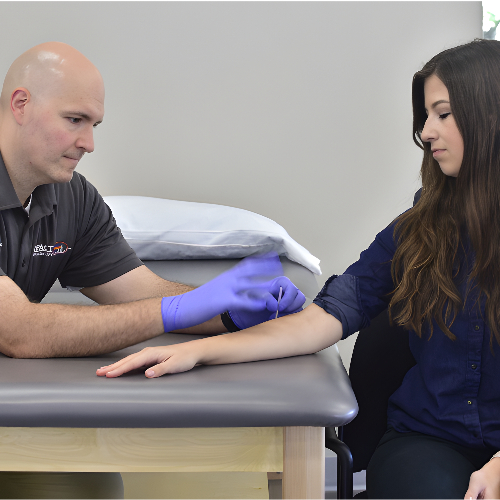
At IMPACT Physical Therapy & Sports Recovery, dry needling supports progress when it is paired with movement work, strengthening, and education. The team starts with an evaluation, then uses the right tools for the right phase of recovery. Dry needling uses a thin needle to penetrate the skin and stimulate trigger points and muscular and connective tissues. Using the needle, a physical therapist targets tissues that they cannot treat manually. That focused input can make movement training easier, especially when tightness blocks progress.
Approaches that work well with trigger point dry needling include:
- Manual therapy to improve joint and soft tissue mobility, helping reduce stiffness that limits motion
- Strength and stability exercise to improve support around the painful area, improving confidence with activity
- Movement retraining to reduce strain from inefficient patterns, supporting better control during daily tasks
- Neuromuscular reeducation to improve coordination and muscle timing, helping movement feel more reliable
- Education on training load, posture, and recovery habits, helping symptoms stay calmer between visits
- Athletic training support when appropriate, such as return-to-sport progressions, warm-up structure, and performance planning for athletes who need a safer transition back to higher demands
What to Expect During and After Treatment
Many people feel nervous about the word “needle,” so the team at IMPACT Physical Therapy & Sports Recovery sets expectations clearly before starting. The technique uses a “dry” needle, one that has no medication or injection in it. The needle is inserted through the skin into areas of the muscle, which are called trigger points. The goal is not to numb the area but to change how the muscle behaves so movement feels easier. The needles do not hurt going in because they are very fine and solid, and they only stay in long enough to relax the muscle. Your physical therapist chooses the number of needles based on the areas being treated and what your movement exam shows. After treatment, you may feel slightly sore after dry needling, but within a period of a few hours to a day, you will feel less pain and tightness in the muscles, and you’ll notice an improvement in chronic injuries.
Performance, Recovery, and the IMPACT Approach
IMPACT Physical Therapy & Sports Recovery uses dry needling with a bigger goal in mind: getting you back to moving well, training well, and recovering well. The clinic emphasizes consistency and progression. At IMPACT Physical Therapy & Sports Recovery we want the best for all of our patients. The team also connects dry needling to performance-minded recovery options when it fits your goals. This philosophy supports athletes and active adults across Illinois] who want care that respects both recovery and performance.
All sports recovery services in a Therapeutic Massage Tune Up, including ART, ASTYM, Cupping, Dry Needling and Graston, are provided for the sole purpose of maintenance and performance enhancement by a licensed and credentialed practitioner.
Ready to Add Dry Needling to Your Plan?
If tight muscles, trigger points, or recurring myofascial pain keep limiting your training or daily life, trigger point dry needling at IMPACT Physical Therapy & Sports Recovery may be a helpful next step. Contact IMPACT Physical Therapy & Sports Recovery to request an appointment and learn how dry needling can fit into a personalized plan that supports better movement, stronger function, and confident activity across Illinois.
Frequently Asked Questions About Trigger Point Dry Needling
Does trigger point dry needling treat the muscle knot directly?
What is myofascial pain and why does it refer pain elsewhere?
Is dry needling used by itself at IMPACT Physical Therapy & Sports Recovery?
We offer trigger point dry needling at the locations listed below: Champaign, IL, Hinsdale, IL, Lakeview, IL, Naperville, IL, Oak Lawn, IL, Orland-Park, IL, South-Loop, IL